
Loss Is Loss. Pain Is Pain: Grief, the Brain, and the Strange Ways One Goodbye Can Find Another

by Heather (LS) Scarboro LCMHC-QS, LCAS, NCC

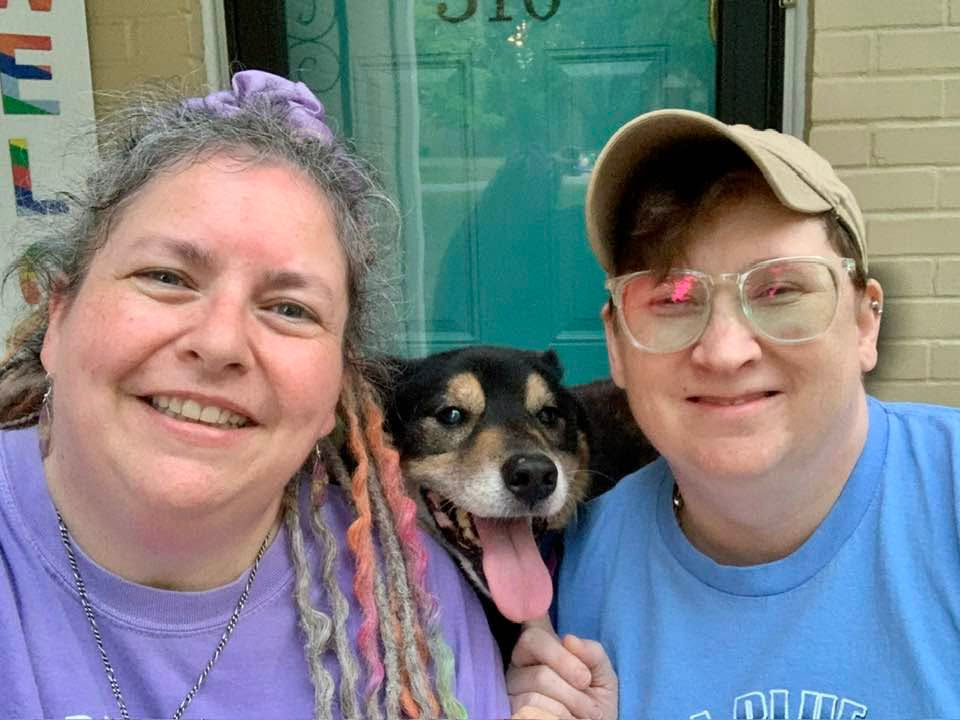
On September 3, 2026, we said goodbye to our family dog, Shade. He was 16. Sixteen years.
There is something almost impossible about condensing sixteen years of companionship into a sentence like, “We lost our dog.” We didn't just lose a dog.
We lost a member of our family.
We lost routines. Sounds. Habits. Responsibilities. The familiar presence of a living being who had occupied our home and our lives for sixteen years. And the last two years everything revolved around what Shade needed, wanted, or would bring him comfort. He even had a 15th Birthday Party with all the humans who love him - so many people loved him.
Shade had several illnesses, but they were managed—with medications, diet, veterinary care, and the most important treatment plan of all: being completely and unapologetically pampered and loved.
As all Fur Children should be.
We knew we were getting close to the end. We were fortunate enough to plan his goodbye. The veterinarian came to our house, so Shade didn't have to make a stressful trip and so his feline brother Asher could also be present and understand the transition more easily.

He was home.
He was with his family.
He was ready, even if we weren't.
It was peaceful. It was easy.
And the process was much quicker than I expected.
I think some part of my brain believed that because we had planned it, I would somehow be prepared for it.
Turns out, knowing a loss is coming and experiencing that loss are two very different things.
One moment he was here.
Then he was gone. The brain perceives it. The body senses it. The heart sure as hell feels it.
The Brain Doesn't Have a Filing Cabinet Labeled "Shade"
As a trauma therapist, I'm fascinated by the ways our brains store experiences.
We tend to think about memories as individual files:
Shade — September 3, 2026.
Gary — August 20, 2010.
That relationship that ended.
That job I lost.
That version of myself that doesn't exist anymore.
But that's not really how emotional memory works.
Our experiences become connected through networks of associations—emotions, sensations, beliefs, sounds, smells, body states, attachment experiences, and meaning.
So the brain doesn't necessarily organize every loss according to who died or what happened.
At times, it arranges experiences based on:
This is how it feels to miss someone.
This is how it feels to say goodbye.
This is the sensation of being powerless.
This is the sensation when something that has always been present suddenly disappears.
And sometimes a new loss knocks on the door of an old one.
That happened for me.
Sixteen Years Apart — and Somehow Right Next to Each Other
Only a couple of weeks before losing Shade was August 20th, a yearly reminder to so many.
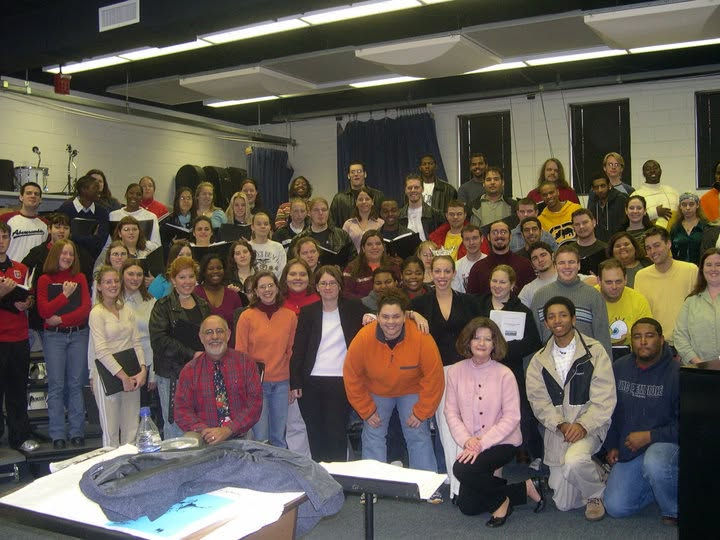
August 20, 2010, was the day Dr. Gary Wright died.

Gary served as my undergraduate music advisor, yet that title doesn't fully capture the essence of our relationship.
He was a mentor.
A friend.
A father figure to me and my system.
He believed in me during periods of my life when believing in myself was incredibly difficult. He supported me far beyond what was required of someone whose official job was helping me navigate an undergraduate music degree.
His death was nothing like Shade's.
Gary's passing was abrupt.
Unforeseen.
There was no anticipation.
No opportunity to brace for it.
No gradual acceptance that his body was weary and that releasing was an act of compassion.
There was merely a world with Gary present—and then one without him.
September 3, 2026, was quite different.
We had the chance to make choices for Shade.
We had the opportunity to protect him.
We were able to surround him with love.
We had the moment to say farewell.
And yet...
Loss is loss.
Not the same loss.
Not the same circumstances.
Not the same relationship.
Not the same trauma.
But loss.
And the emotional brain recognizes familiar ground.
We Really Like to Rank Grief
Humans have an interesting habit of deciding which losses we're "allowed" to hurt over.
Someone loses a parent and we understand grief.
Someone loses a dog and eventually somebody says, “Are you thinking about getting another one?” Someone gets divorced and hears, “At least you weren't married that long.”
Someone loses a friendship and wonders whether they're even allowed to call what they're experiencing grief. Someone retires from a career they loved and can't understand why they're depressed. Someone develops a chronic illness and mourns the body they used to inhabit.
Someone leaves an abusive relationship and grieves the person who hurt them.
Someone finally establishes a healthy boundary with a family member and then discovers that doing the right thing can still break your heart.
We want grief to follow rules.
It doesn't.
Loss is loss. Pain is pain.
That doesn't mean every loss is equivalent.
It means pain doesn't have to win a comparison contest before it deserves compassion.
Grief Is Bigger Than Death
When we hear the word grief, most of us immediately think about death. Death is certainly one of the most profound ways we experience loss. But it isn't the only one.
There is non-death loss:
We can grieve a relationship that ended.
A friendship that faded.
A marriage that changed.
A career, a home, a community.
Our health, mobility, and independence.
A past role, an imagined future, and a missed childhood.
A living parent unable to fulfill our needs.
Our pre-trauma self.
Sometimes there isn't a funeral. There aren't casseroles arriving at the house. There isn't a sympathy card section at the store for "I'm sorry the future you imagined isn't going to happen."
But the nervous system can still experience loss. And all loss deserves to be acknowledged.
Disenfranchised Grief: When the World Doesn't Quite Understand Why You're Hurting
There is also something called disenfranchised grief.

It describes grief that isn't fully recognized, validated, or socially supported.
Pet loss can absolutely fall into this category.
Anyone who has deeply loved an animal knows how inadequate the phrase “just a pet” can feel.
Shade wasn't just anything.
For sixteen years, he was part of the rhythm of our family. And disenfranchised grief extends far beyond animals.
It can happen after the death of an ex-partner.
A miscarriage or pregnancy loss.
The loss of an estranged family member.
The death of someone with whom you had a complicated relationship.
The loss of a therapist, teacher, mentor, chosen-family member, or other relationship that society doesn't necessarily know how to categorize.
It can happen when other people don't know about the relationship at all.
And sometimes disenfranchised grief comes with an additional wound:
We start questioning whether we have the right to hurt.
You do not need someone else's permission for a relationship to have mattered.
When Grief Gets Stuck
Then there are times when grief becomes something more persistent and impairing.
The phrase complicated grief refers to grief that is stuck, consuming, or hard to integrate. Clinically, this is recognized as Prolonged Grief Disorder, with specific diagnostic criteria and timeframes. This is important because intense grief immediately after a loss is not automatically pathological. Crying isn't pathology. Missing someone isn't pathology. Talking to someone who died isn't automatically pathology. Keeping their belongings isn't automatically pathology.
Laughing one minute and sobbing the next isn't pathology. Having a good day doesn't mean you're "over it," and having a terrible day six months later doesn't mean you've failed at grieving.
There isn't a gold star for grieving correctly.
But sometimes grief remains so intense and persistent that it significantly interferes with our ability to engage with life. Sometimes traumatic circumstances surrounding a death become tangled with the grief itself. Sometimes avoidance, guilt, anger, identity disruption, yearning, or disbelief seem impossible to move through.
That deserves care, too.
Not because someone is grieving incorrectly.
Because sometimes our systems need help carrying what happened.
Trauma and Grief Can Share a Room
This is particularly important in trauma work. Grief and trauma aren't interchangeable.
But they can coexist.

Gary's death was sudden and unexpected.
Shade's death was planned, peaceful, and compassionate.
Those are objectively different experiences.
But when Shade died, my brain didn't pull out a clipboard and say:
"Okay, everyone, this is an anticipated pet-loss situation. Please refrain from activating any material associated with sudden human bereavement from August 2010."
Brains are incredibly sophisticated.
They are also occasionally terrible administrative assistants.
Instead, emotional networks activate.
The present touches the past.
Sixteen years collapses for a moment.
And suddenly grief has layers.
This is something those of us with trauma histories—and particularly those of us whose brains learned to survive through dissociation—may understand especially well.
Sometimes the intensity of today's emotion isn't only about today and that doesn't make today's emotion inappropriate.
It means there may be more than one story asking to be heard.
Grief Lives in the Body

There is another part of grief we don't talk about enough:
It is physical.
You don't only think about someone being gone.
Your body expects them.
You listen to the music that was shared between you.
You rewatch the series that you spoke about and dissected the historical correctness via telephone over and over (ie The Tudors).
You hear something and, for half a second, expect paws.
You fold your chopstick paper (and the tip) into origami... each and every time you dine out.
You rush home after 3.5 hours out for elder puppy potty breaks.
You wake up and something feels different before your conscious brain remembers why.
Relationships become routines, and routines become embodied.
Our nervous systems learn the creatures we love.
Their voices.
Their footsteps.
Their smells.
Their laughter.
Their needs.
Their presence.
So when someone dies, the cognitive brain may understand immediately:
Shade is gone. Gary is gone.
But the rest of the nervous system may need considerably longer to learn what that means.
Grief Doesn't Mean We Haven't Healed
Sixteen years have passed since Gary died.
And I still miss him. I still think of him daily. That isn't evidence that I failed to heal.
Quite the opposite.

I've lived a whole lot of life since August 20, 2010. As I've stated in a memorial social media post on August 20th 2026:
"I got married.
I became a therapist.
I built a practice.
I became an advocate for people living with dissociative disorders.
I became more open about my own system and found pride in who we are and how we were forged.
I kept playing music.
I kept becoming."
And Gary is woven into pieces of all of it.
There are things I wish I could tell him and there are moments when I can almost imagine exactly what he'd say. There are parts of myself that exist differently because someone once believed in me before I believed in myself.
Healing didn't require me to stop loving him.
Why would it?
Love Doesn't Disappear. It Changes Jobs.
Maybe that's one of the things grief has taught me.
When someone is alive, love has somewhere tangible to go.
You feed the dog.
You give the medication.
You make the phone call.
You play the song.
You tell the story.
You hug the person.
You sit beside them.
You say, "I love you."
And then they're gone.
But the love isn't.
So what the hell are we supposed to do with it?
Maybe grief is partly the process of teaching love how to exist in a different form.
Shade doesn't need his medications anymore.
Gary doesn't need me to call him and tell him what I've been doing with my life.
But both relationships continue to exist through memory, influence, story, music, photographs, laughter, values, and the person I've become because they existed.
The relationship changes.
The love doesn't have to disappear.
Loss Is Loss. Pain Is Pain.
Maybe we don't need to rank it.
Maybe we don't need to decide whether losing a dog is "supposed" to hurt this much.
Maybe we don't need to tell someone that their divorce isn't as bad as a death.
Maybe we don't need to tell someone grieving their health that they should be grateful they're alive.
Maybe we don't need to tell someone mourning an estranged parent that they shouldn't be sad because the relationship was terrible anyway.
Maybe pain doesn't need to be defended.
Loss is loss.
Pain is pain.
Not all losses are identical, but all grief deserves curiosity before judgment.
If you're grieving—whether due to death, change, or unfulfilled desires—you don't need to prove your loss qualifies.
If current grief revives past emotions, it doesn't mean regression; your brain may just recognize the pattern.
"Oh. I've felt something like this before."
Maybe instead of asking:
"Why am I still upset about this?"
We could ask:
"What am I missing?"
"What did this relationship mean to me?"
"What other losses does this remind my body of?"
"What does this grief need from me today?"
And perhaps the most important question:
"What did I love here?"
Because grief is painful precisely because something mattered.
Shade mattered.
Gary mattered.
Their roles in my life were nothing alike.
Their deaths were nothing alike.
Their goodbyes were nothing alike.
But both left fingerprints on my life.
And this September, one loss reached across sixteen years and touched another.
Not because I haven't healed.
Not because something is wrong.
Because the brain remembers.
Because attachment remembers.
Because love remembers.
And sometimes grief is simply love noticing an empty chair, an empty dog bed, a missing voice, or a quiet place in the house and whispering:
Someone important was here.
I remember.
They mattered.
They still do.


Comments